Saturday, 24 July 2010

Inspiration: The Poetry of Richard Stanyhurst


Richard Stanihurst (or Stanyhurst) was an Irish poet and alchemist, 1547-1618.

He was a controversial figure - Catholic, born in Dublin but completed his studies in Oxford. He was a translator of Virgil. He worked for some time in the court of Philip II of Spain, studying alchemy in the laboratory in El Escorial.

As a poet he was sometimes critizised (even mocked) for his extravagant vocabulary and meter. But I picked up an anthology of 16th century at the Southbank's Poetry Library (wonderful place, visit it if you are in London) and I found his version of The Aeneid full of energy and strange and wondruous sounds.

I that in old season wyth reeds oten harmonye whistled
My rural sonnet; from forrest flitted (I) forced
Thee sulckīg swincker thee soyle, thoghe craggie, to sunder.
A labor and a trauaile too plow swayns hertelye welcoō.
Now māhod and garbroyls J chaunt, and martial horror.

There are not so many poets from Ireland that wrote in English and were accepted in the English literary circles at that time. I'm interested in the Irish experience in those centuries. None of the characters in my novel is Irish but when they arrive in Ireland they encounter a strange land that feels and sounds different to any other place these soldiers have been. I want to hear these sounds in the poetry of the 16th and 17th centuries, through the Irish poets.

Tuesday, 22 June 2010

REVIEW: A Hero Of Our Time by Mikhail Lermontov


For the Classics Circuit this month I choose to read Mikhail Lermontov's A Hero Of Our Time. I decided not to be obvious and stay away from my beloved Dostoevsky and ventured into new Russian territories. Many factors were in Lermontov's favour: he was the so-called heir of Pushkin and we all love our Pushkin; one of my favourite films (Un Coeur en Hiver by Claude Sautet) is a loose adaptation of one of the stories in this novella; and finally I was able to find (and afford, always very important) a copy of the translation by Vladimir Nabokov, a hero of mine since I was a teenager, so this would made a nice addition in completing his body of work.

And fortunately it was a great choice. A Hero of Our Time was an entertaining, tremendously cool book to pick up.

A Hero Of Our Time
Mikhail Lermontov (translated by Vladimir & Dmitri Nabokov)
Ardis Publishing
210 pages

Summary
A Hero Of Our Time is not so much what you would expect of a novel but more a collection of five stories surrounding the central, title character. These stories vary in length and genre, are mostly set in the Caucasian frontier and include all sorts of adventures for our hero: skirmishes with enemy soldiers, kidnapping, Russian roulette, duels, tragic love affairs. But the central character, the young officer Grigory Aleksandrovich Pechorin, is less than heroic and throughout the stories the author paints an ambiguous portrait of his hero: he is dissastisfied and bored, unfeeling towards other and often cruel - specially in his love affairs.

In the first story we see Pechorin kidnap a young Princess (in exchange for helping her brother steal a horse), making her fall in love with him only to lose all interest in her shortly, and finally somehow indirectly causing her death. Next we see Pechorin himself make an appearance, crossing paths with the narrator, but Pechorin behaves cruelly and coldly towards Maksim, an older officer who very much loved him and so both narrator and reader are left with the worst possible opinion of our hero. But then the book switches point of view and we read Pechorin's own journals - and far from trying to excuse himself Pechorin openly declares his flaws and vices, glosses over them, and recalls other incidents in which he was at fault, most notoriously a duel with another man for a woman, whom Pechorin did not really love but was merely entertaining himself with. This is a hero of our time.

Thursday, 17 June 2010

USEFUL & HELPFUL: Arms & Armour of the English Civil Wars


Arms and Armour of the English Civil Wars, by David Blackmore (Edited by Royal Armouries)

Though its writing style is a bit less than smooth, this book  has been indeed useful and helpful for two reasons: the detailed explanation (with figures) of the way firearms worked, with their different locks (match-lock, flint-lock, yadda yadda yadda) and the quoting of contemporary sources to illustrate the examples, which was a nice touch.

At 8.50 pounds second-hand at Waterstones in Bloomsbury it was a bit pricey, I admit, but the book is generous in images and it sure was inspirational, so I'm not really complaining.

Friday, 21 May 2010

REVIEW: The Go-Between


The Go-Between
L.P Hartley
401 pages
Library copy


Read for the Spotlight On... Series focusing on the New York Review Books.

In the summer of 1900 Leo Colston, a young schoolboy, is invited to spend the holidays at Brandham Hall, the country house of his friend Marcus' family, the Maudleys. Having never been out of his home for such a long time Leo, of a lower class than his hosts, soon becomes entangled with the lives of the adults in Norfolk: he gets infatuated with Marcus' older sister, Marian, and by chance becomes the messenger between the girl and a nearby farmer, Ted Burguess, who is in love with her. Marian and Ted use Leo to carry letters from one to another without the rest of the family knowing - since they have different social status their affair would not be looked upon kindly and needs to be kept a secret.


Sunday, 9 May 2010

In search of Bunhill Fields and the perfect coffee


Bunhill Fields is the famous dissenters' cemetery near Old Street and Liverpool Street station in London. What neglect of me to have waited until now (and a Civil War reason for it) to visit. Specially since there lies William Blake, a particular favourite of mine since I was 13 or 14 and in one of my not-so-frequent visits to my father's family I chanced upon a volume of his poetry translated into Spanish. My grandmother gave me the book and I remember the excitement upon reading those lines for the first time. Blake was a revolutionary rebellious methaphysical malcontent, all of which appeal to me.


But this is not why we are here. Neither are the graves of Daniel Defoe or John Buynan, admired as they are. Why I'm here is because this ground is full of puritan's bones, directly or indirectly connected to those who made up a large bulk of the Parlamentarian faction during the English Civil War.

First of all, it is a wonderful, soothing place. I saw many people pass through its avenues (almost in the heart of the City, businessmen and women made their way across its green stillness) but very few paused to take in the calming shadows and earthy smell, the sounds of birds over the background of busy London traffic. There was a man walking his dog, well, more like playing with it extensively, it was a treat for the dog, he spent almost half hour there. I am suspicious of dogs in London parks (last year not once but twice I had my food stolen by dogs while I was picnic-ing in Battersea and Kensington) so I kept my distance. I spent a great deal of time with William Blake and was pleased to see traces of offerings upon and around his gravestone. Still going strong, old Blake.


THE SICK ROSE
      ROSE, thou art sick!
      The invisible worm,
      That flies in the night,
      In the howling storm,
       
      Has found out thy bed
      Of crimson joy;
      And his dark secret love
      Does thy life destroy.


Defoe has had not such luck. Better known by the general public, that's for sure (I cannot remember if I had to read Robinson Crusoe for school back in Spain but it's very possible that I did) but maybe he doesn't inspire that kind of dedication or committed fans. Other particular reason for my trip to Bunhill Fields was that Defoe has started to become a friend lately, after a second-hand battered copy of his Tour Through The Whole Islands of Britain made its way to my hands and now I try to use it for my own, much more modest, trips. He is good company in a journey.


Defoe might prove another Civil War connection yet, as I am waiting for Amazon to send me a copy of his Memoirs of a Cavalier which deals, as the title points out, with the sibject, as well as the Thirty Years War.

Lovely as walking around the burial grounds, and sitting on the benches and trying to remember all the words to "The Tyger" was, my final goal was somehow trampled. Wikipedia and the various websites I visited informed that two of the sons of Oliver Cromwell (including the one that succeeded him as Lord Protector, Richard) and his daughter's husband, Charles Fleetwood, high rank in Cromwell's army. I also had my sights on the graves of a couple of Quaker movement founders, George Fox and George Whitehead. This was all in vain. Said graves where in the part of the park not accesible to the public. Most graves were faded and bitten by time so it was impossible to spot any from a distance. Woe was me.


SIDE NOTE: I approached Bunhill Fields via starting at Bank station first. Why? Well, apart from books my other passion is coffee so I decided to treat myself to a breakfast at the Bank branch of Taylor Street Baristas - this cafe has a huge and completely justified fame. I was afraid of the hype but oh, no. Their flat white is an otherworldly experience. If you are ever in the City please do yourself a favour and visit.

A trip to Chichester cathedral


This past week I was in Chichester for a couple of hours for reasons that had nothing to do with the 17th century but I thought that I might as well keep up my search of all things related to the English Civil War. Or maybe this was an afterthought - for when I stepped inside Chichester's cathedral my only thoughts were for my love of these buildings and of poetry. Maybe one has to be a convinced atheist like me to be as much in love with cathedrals and churches as I am. Because when you take God out of the equation you are left alone with the truth of these beautiful, almost impossible places.


The building of the cathedral started on 1076, after the Council of London decided to move the cathedral from nearby Sesley to Chichester. Small for a cathedral, Chichester was when constructed a typical example of Norman style, but after the fire of 1187 Early Gothic elements were added. We are in Early Gothic country then and I must say that's where I feel most at ease. I like transition art forms and traces of more primitive styles to show up, specially in architecture. Chichester is a weird place, though, in that it mixes this very old enviroment with a lot of nods to modern - indeed modernist - art: there's a stunning tinted window by Marc Chagall, tapestries by John Piper and a painting by Graham Sutherland. All of this resting perfectly besides the Tudor painting of Kings and Queens of England and past bishops by Lambert Barnard that dominate the transepts. Wonderful incongruences. The most famous piece in the cathedral, though, is a medieval tomb for a knight and his wife. This particular sculpture depicts the couple holding hands, an unusual show of public affection for the times (and the status of the knight as well). Even if there has been some controversy around this tomb (is the hand-holding a later addition and not the astonishing medieval rarity all believed it to be?) one can't help to be a little in awe at the sight, specially if one keeps in mind (there's a reproduction by the side of the tomb, in case you forget) Philip Larkin's unbearably beautiful poem:

‘ Side by side, their faces blurred,
The earl and countess lie in stone,
Their proper habits vaguely shown
As jointed armour, stiffened pleat,
And that faint hint of the absurd -
The little dogs under their feet.

Such plainness of the pre-baroque
Hardly involves the eye, until
It meets his left-hand gauntlet, still
Clasped empty in the other; and
One sees, with a sharp tender shock,
His hand withdrawn, holding her hand.

They would not think to lie so long.
Such faithfulness in effigy
Was just a detail friends would see:
A sculptor's sweet commissioned grace
Thrown off in helping to prolong
The Latin names around the base.

They would no guess how early in
Their supine stationary voyage
The air would change to soundless damage,
Turn the old tenantry away;
How soon succeeding eyes begin
To look, not read. Rigidly they

Persisted, linked, through lengths and breadths
Of time. Snow fell, undated. Light
Each summer thronged the grass. A bright
Litter of birdcalls strewed the same
Bone-littered ground. And up the paths
The endless altered people came,

Washing at their identity.
Now, helpless in the hollow of
An unarmorial age, a trough
Of smoke in slow suspended skeins
Above their scrap of history,
Only an attitude remains:

Time has transfigures them into
Untruth. The stone fidelity
They hardly meant has come to be
Their final blazon, and to prove
Our almost-instinct almost true:
What will survive of us is love.
  ’

(The tomb and the poem got me thinking a lot. I confess to being very shaken by it - I was fascinated by the fact that this very private gesture - the tomb was not meant to be seen by strangers, it was in the knight's house until it was destroyed, never meant to be displayed in a cathedral - ends up being spied on and reinterpreted by those who come upon it. It might as well have been all an invention: love is not there until we invent it. It got me thinking about private affections being transformed by and into stories. Yes, of course, it got me thinking about my novel.)

I would have been perfectly content with all this: it's a small, wonderful cathedral. But I also discovered some Civil War connections that sparked my imagination. 


When the Civil War broke out in 1942 Chichester declared for the King but the Parliament being strong in the South the army seiged the city. The cathedral itself was a dramatic site, ocuppied and plundered during the siege. (I already have Model Army soldiers sleeping in a desecrated church in the beginning scenes of my book but I wouldn't be surprised if Chichester cathedral ends up getting its way into my story as well somehow). The leader of the Parliamentarian forces in Chichester was William Cawley, son of a wealthy brewer and three times mayor of Chichester, John Cawley - pictured, remembered in this portrait in the cathedral. Fascinatingly so William Cawley was one of the men who signed Charles I's death sentence, and he had to flee England come the Restoration.

So, Civil War connections indeed. I got more than I bargained for. Thank you, Chichester.

Epilogue: Simon Armitage's new book came out while I was in Chichester, and since I always make a point of buying a book whenever I can if I visit a new city or town, and since I couldn't wait to read my favourite living poet's new volume, I was glad to pick up a copy:

Sunday, 25 April 2010

REVIEW: The Good Man Jesus and the Scoundrel Christ, by Phillip Pullman


Title: The Good Man Jesus And The Scoundrel Christ
Author: Phillip Pullman
Pages: 256
Rating: 3.5/5
Bought/Borrowed/Loaned: Read in one sitting in Foyles


SUMMARY
Joseph and Mary have twins: Jesus, healthy and strong, loved by everyone; and Christ, a sickly child with a wondruous knowledge of the word of God and His Will. They grow up and Christ realizes Jesus is just the man to lead their people to revolution, to an uprising against the invading and unfair rule of Rome. Jesus indeed does that, but the miracles are staged by Christ and his determination to give his brother good press. As Jesus grows in power and Rome begins to see him as a threat both brothers face their doubts about God, and each other.


REVIEW
The Good Man Jesus and the Scoundrel Christ is the latest installment in Canongate's Myth series: books that take a well-known myth and turn in a new retelling. In that sense this is exactly what Pullman has done - he takes the familiar story of Jesus Christ and introduces a variation (Jesus and Christ as two separate people) to illuminate the themes of this myth that he is interested in. Faith and propaganda are the main lifelines of this story and though Pullman's exploration is as straightforward and light-feeted as his language in this book it is enough to pick the interest of any readers.

It's easy to see why the release of this book might have upset some Christian groups; I suggest they start by reading the book before condemning it. Granted, Pullman is an atheist and that was bound to colour the retelling of the myth. Granted, I am a deeply convinced atheist as well so the book obviously didn't hurt any sensibility here. But I also think this is a book that portrays religious faith with a deep respect. There are wonderful passages about Jesus and his love for God, despite the doubts, and of Christ and his belief on the good of the cause, both a political and religious one.

The stranger
A stranger came to Christ and spoke to him privately.
"I'm interested in you," he said. "Your brother is attracting all the attention, but I think you are the one I should speak to."
"Who are you?" said Christ. "And how do you know about me? I have never spoken in public, unlike Jesus."
"I heard a story about your birth. Some shepherds saw a vision that led them to you, and some magicians from the East brought you gifts. Isn't that so?"
"Why, yes," said Christ.
"And I spoke to your mother yesterday, and she told me of what happened when John baptised Jesus. You heard a voice speaking from a cloud."
"My mother should not have spoken of that," said Christ modestly.
"And some years ago, you confounded the priests in the temple at Jerusalem when your brother got into trouble. People remember these things."
"But – who are you? And what do you want?"
"I want to make sure that you have your rightful reward. I want the world to know your name as well as that of Jesus. In fact I want your name to shine with even greater splendour. He is a man, and only a man, but you are the word of God."
"I don't know that expression, the word of God. What does it mean? And again, sir – who are you?"
"There is time, and there is what is beyond time. There is darkness, and there is light. There is the world and the flesh, and there is God. These things are separated by a gulf deeper than any man can measure, and no man can cross it; but the word of God can come from God to the world and the flesh, from light to darkness, from what is beyond time into time. Now I must go away, and you must watch and wait, but I shall come to you again."
And he left. Christ had not found out his name, but the stranger had spoken with such knowledge and clarity that Christ knew, without having to ask, that he was an important teacher, no doubt a priest, perhaps from Jerusalem itself. After all, he had mentioned the incident in the temple, and how else would he have heard about it?
 The way Pullam uses language in this book is a very interesting method: the writing is simple and sparse, echoing the Bible stories, with their urgent sense of destiny and the divine. It makes for a short volume, very direct story-telling. That approach is the book's greatest strength and at the same time one of the reasons I could not connect with the character fully: Pullamn makes all his characters archetypes, highlighting the myth to suvert it but most of the characters in the story failed to seem like people to me. They sound like story-devices, which I guess in a way it's fitting for a book that talks to us about the advantages and dangers of storytelling, but I must admit that made it difficult for me to connect emotionally with the book. But this is one a minor quibble - perhaps I was wishing for a different book that does not exist. Christ interested me much more than Jesus (except when Jesus confronted God and His Silence in the Garden of Gethsemane) and I would have liked his issues explored in more length.

I love Pullman's writing, I have for many years (since I was a teenager and Northern Lights came out in a Spanish translation), and here the simple and humble, almost naked style has the loveliness of certain religious painting (I'm think of Murillo and Zurbarán here, the brown tones, the confident brush-strokes, the overwhelming compassion of the images) and although I think this is the weakest book in the Myth series (but then again I love Jeanette Winterson and Margaret Atwood more than I do Pullman) The Good Man Jesus and the Scoundrel Christ is worth a reading, about the power of the Word of God but also about how men create the Word and the purposes it serves.

A story about stories.

More: There is a fantastic and deep review of the book at Things Mean A Lot (a book blog I highly recommend), which made me want to read the book immediately. Visit.

Saturday, 24 April 2010

April 23: Favourite Shakespeare Books Post

I am a compulsive Shakespeare-related reader and over the years my bookshelves have filled and overspilled with biographies of the man from Stratford-upon-Avon and studies about his work, even with manga-like comic adaptations of dubious graphic quality. One has to fill her library with light and there's no light brighter than Will's words. So to celebrate today his 446th birthday I just thought I'd talk about some of my favourite (non-fiction) books about him.

1599: A Year In The Life of William Shakespeare, by James Shapiro.
Most Shakespeare biographies fail because there's so little we know for certain about the man that it all ends being conjecture without the honesty of admitting it. Flights of fancy are welcome, provided you don't try to pass them as academia. Here James Shapiro takes a clever, reductive angle. He writes about just ONE YEAR in the life of the playwright; but with a limited structure he lets his readers navigate the world of Elizabethan London on their own, letting the details of the period come alive and with a clear narrative flair. It also has one of the best opening scenes in any book, fiction or non-fiction: the image of Shakespeare and fellow company actors carrying the wood of their old theatre across a frozen Thames is obviously apocrypha, but unforgettable.

Shakespeare, by Anthony Burgess.
Word-boy and cleverest of the clever, novelist Anthony Burgess wrote the book I love most in the world (Nothing Like The Sun) on this very subject: an imagined life of Shakespeare. But here it's that novel's non-fiction twi - a sharp and concise biography of the poet, accesible to any reader. A thin, wonderful volume. It is a great book to kick off your Shakespeare readings, if you've never picked up a biography of the man.


Will In The World: How Shakespeare Became Shakespeare, by Stephen Greenblatt.
A deep, lyrical, excellently-researched meditation on how the events in Shakespeare's life and the period he lived in could have influenced, coloured and facilitate the writer's work. With a fortunate focus on Shakespeare's language, this is a book to keep near you at all times.


Shakespeare's Language, by Frank Kermode.
If you are a word-geek like me, obsessed with the way Will Shakespeare was obssessed with language, this is the book for you. Kermode has a keen eye and explains things very well, even I - who doesn't have English as my first language - could get through the whole business easily. It explores the peculiar language of each play extensively, but never gets too academic for the average reader.

Friday, 23 April 2010

Simon Armitage @ Swedenborg House


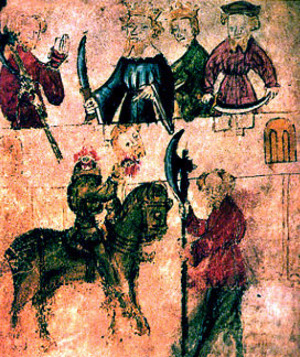
Last night I went to a reading-plus-talk about the translation of the epic Old English poem Sir Gawain and the Green Knight, by Simon Armitage. For various reasons (you can check the poem of the day at his website if you want to find them) Simon Armitage is my favourite living poet so I could not past up this opportinity to see him read his work live for the first time. I knew nothing about the Swedenborg Society when I arrived at their House in Bloomsbury, nothing about Emanuel Swedenborg, inventor and philosopher of the 18th century. But it was a prettily put event; Armitage not only read from his world-famous translation of Gawain and answered the audience questions but he also talked about the themes in the poem and showed us a bit of the documentary he made for BBC4 about it.

Gawain is a gorgeous poem and Armitage's translation (my introduction to the poem, actually, a couple of years ago) keeps the music of the original Middle-English language, it's a piece full of alliterations and wonderful noise. Armitage insisted in the connection of the poem with nature, the way the language and landscape are entwined. This is particularly interesting for a poet like Armitage, self-confessed Ted Hughes admirer and a worthy heir of England's best nature poet. It is also the most interesting aspect of the translation for me, as well; how the landscape needs to influence the language of your work, specially if you are dealing with a historical period (Gawain was probably written around 1400) where people were more in contact with raw nature on a daily basis than we are now in our technological and man-made society. The writing has to reflect the sound and rhythm of the story's landscapes and that's what Armitage excels at in this translation. That and a very peculiar sense of humour, perfectly fit to the playful original. Armitage confessed to being drawn to the topography of the poem because it's very likely that the original author came from the same area as Armitage comes from, a frontier-land in the south Pennines - somewhere between Cheshire, Derbyshire, Staffordshire and Lancashire.

Gawain is a great mystery - written by a someone contemporary of Chaucer but with a very different language, a whole other dialect indeed, the poem catches the excitement of the English language starting to come together, come alive. We don't know who wrote Sir Gawain and the Green Knight and we might never find out. Simon Armitage, at least, declared his hopes that we should never resolve the riddle of this anonymous author. He'd like to live with the mystery intact.

This is one of my favourite passages, when the Green Knight gets his head chopped off at the Court of King Arthur, but remains alive and well nonetheless:

In the standing position he prepared to be struck,
bent forward, revealing a flash of green flesh
as he heaped his hair to the crown of his head,
the nape of his neck now naked and ready.
Gawain grips the axe and heaves it heavenwards,
plants his left foot firmly on the floor in front,
then swings it swiftly towards the bare skin.
The cleanness of the strike cleaved the spinal cord
and parted the fat and the flesh so far
that that bright steel blade took a bite from the floor.
The handsome head tumbles onto the earth
and the king's men kick it as it clatters past.
Blood gutters brightly against his green gown,
yet the man doesn't shudder or stagger or sink
but trudges towards them on those tree-trunk legs
and rummages around, reaches at their feet
and cops hold of his head and hoists it high,
and strides to his steed, snatches the bridle,
steps into the stirrup and swings into the saddle
still gripping his head by a handful of hair.
Then he settles himself in his seat with the ease
of a man unmarked, never mind being minus
his head!
And when he wheeled about
his bloody neck still bled.
His point was proved. The court
was deadened now with dread.


Sunday, 18 April 2010

REVIEW: Music And Silence, by Rose Tremain


Title: Music and Silence
Author: Rose Tremain
Pages: 464
Rating: 4.5/5
Bought/Borrowed/Loaned: Bought 2nd hand from amazon.co.uk

SUMMARY
Music and Silence is many things, encompasses many stories and moments, fleeting, magical, painful moments. But at its centre is Peter Claire, an English lute player who arrives in the court of King Christian IV of Denmark in 1630. The king soon takes a liking to Peter, calling him his "angel" due to Peter's good looks, and asking the Englishman to be his personal aide and help in times of need. Christian is a contradictory man, haunted by the past, pained by his unrequited love for his wife the Queen Kirsten, who is conducting a not-so-discreet adulterous affair. A mirror image of Peter's role the queen has employed a new lady-in-waiting at the time of Peter's arrival in Denmark: Emilia Tilsen, a quiet and compassionate girl, becomes the queen's confidant. Both Peter and Emilia are escaping from their painful pasts and find themselves, almost inevitably, drawn to each other, seeking love and comfort amidts the royal intrigues and the sorrows of a country in ruin.

REVIEW
The biggest strength of Music and Silence is its kaleidoscopic nature. The accumulation of stories, small in scope or important, like grains of sand that together make up the true landscape of this work. The point of view changes and so do the narrative voices, and the non-chronological plot made me enjoy this book so much, in a way that I had not enjoyed Restoration - maybe the voice in that one was too detached, too clever to begin with, and while that fitted the narrator perfectly, I felt it lacked some heart. There's plenty of heart in Music and Silence, and while occassionally sentimentaly shows its ugly head but otherwise Tremain has an admirable command of her material. Many images will stick to the reader's mind: for me it's the teenage King Christian tending to his best friend Bror during his illness, fighting off Death with the power of writing, the power of names, words.

As a historical novel, which what we are interested in now, this is an example of what should be done: a story told in a shamelessly modern style, which illuminates the 17th century through human detail and lyricism, not dead fact. The gorgeous writing, rather than the predictable character or the thin plot, is what grabs us here. A fine example of literary novel in a historical setting and using history for its own purposes, rather than a historical novel that dispatches literary style as useless, which sadly is what happens with almost every labelled historical novel I've met with.